The genius of Duran Duran was to freeze The Beatles in that train station that was surgin’ with girls. Almost everything Duran Duran did in the 1980s was “A Hard Day’s Night.” They just added the clothes and the hair.

In addition to their big idea, Duran Duran’s first album debuted two months before MTV’s launch in August 1981. Their videos were ready when the new network needed material now now now now now. In the alternate universe where there was no MTV, Duran Duran is a cult act from the U.K. that tours America once a year, playing small clubs with Spandau Ballet and Flock of Haircuts and staging charity cricket matches against Orchestral Manoeuvres in the Dark.

Nick, John, Roger, Andy, and Simon lacked John, Paul, George, and Ringo’s skills and their drive to experiment, and so most of Duran Duran’s songs are filler. You only need eight of them in your life. As a public service, I here present the Essential Eight in album order:

From Duran Duran (1981):
“Girls on Film”

Social commentary on the plight of fashion models. Home-field advantage for this group.

“Is There Something I Should Know?”
No. But I cherish this song anyway.

From Rio (1982):
[The one album to own, and an excellent place to start any scholarly study of the 1980s.]

“Hold Back the Rain”
Rocks hard for five boys who were almost as pretty as me. Plus it’s danceable!

“Hungry Like the Wolf”
Duran Duran at their most swaggering. They were young and chock-full of hormones.

Jude Law is playing Thomas Wolfe in a new movie they’re calling Genius. Why don’t they call it Hungry Like the Wolfe? Am I the only Duranimal who’s thought of this?

“Rio”
This is the big crowd-pleaser, and certainly the most fun on a dance floor. The lyrics are a mess. Everyone loves to laugh at this line:

Her name is Rio and she dances on the sand

But look how good the next line is:

Just like that river twisting through a dusty land

From Seven and the Ragged Tiger (1983):
“The Reflex”

An outstanding dance number. It’s the remix you want, not the original, though both of them were hits. All the Duran Duran hits collections use the remix; that’s the only one I remember anymore.

This is another Beatles similarity, as Phil Spector remixed “The Long and Winding Road” into the version most Beatles fans know. The difference between The Beatles’ situation and Duran Duran’s is that producer Nile Rodgers’ remix of “Reflex” didn’t make Simon Le Bon so upset that he broke up the band and nobody got all mad for like forever.

“New Moon on Monday”
This is supposed to be a sad song, but the boys can’t stay sad for long!

From Notorious (1986):
Notorious”
Its closest kin is David Bowie’s “Let’s Dance.” (Another Nile Rodgers production. You may remember Nile for producing Madonna’s Material Girl and for creating Chic and their 1978 disco anthem, “Le Freak.”) A big change for Duran Duran, just as “Let’s Dance” was a big change for Bowie.

From Medazzaland (1997):
[I have no idea what this title means. It sounds like an abandoned amusement park in Rhode Island.]

“Electric Barbarella”
Their most successful attempt at musical innovation, probably because all the young dudes were approaching 40 (that is, the ones who were still in the band – by this point, 11 musicians had cycled through Duran Duran, and only two of the originals were left). The story is straight out of the parallel-processor world of Gary Numan & His Tubeway Army:

I plug you in
Dim the lights
Electric Barbarella
Your perfect skin
Plastic kiss
Electric Barbarella

Whatever your feelings about dating outside your species, this is an improvement on the 50-below-zero Numan, who wrote about sex only from a distance of several light years.

That’s quite enough for one day about Duran Duran. But I must warn you that an artist or artists who go by the name Duran Duran Duran released a song called “I Hate the ’80s” in 2007. I loved the ’80s. Fail!

Random Pick of the Day
M People, Elegant Slumming (1994)
Not as commercially successful as their rivals, Deee-Lite (“Groove Is in the Heart”), but far more sophisticated. If you like dance pop with a soul flair, a woman with a deep dark voice, and Schroeder’s toy piano, you might be ready for some elegant slumming. This record deserved a better fate than selling for 75 cents on Half.com.

Random Pan of the Day
Various artists, When Pigs Fly: Songs You Thought You’d Never Hear (2003)
When Pigs Fly pairs 12 pop hits with 15 unlikely artists. The disc stumbles off the starting line with Jackie Chan and Ani DiFranco crippling “Unforgettable” and doesn’t stop until Lesley Gore lets all the air out of AC/DC’s “Dirty Deeds Done Dirt Cheap.”

Good thing the guy who wrote “Unforgettable” is dead.

I actually felt sorry for AC/DC.

Most of this album sucks the chrome off a trailer hitch. So why spend two seconds on When Pigs Fly when you could be listening to Shatner torturing “Lucy in the Sky with Diamonds”? Because of Herman’s Hermits and their supernova reimagining of Billy Idol’s “White Wedding.” Far better than the original. And hey, all you screaming female tweens from the ’60s: Peter Noone is as good as ever!


In our last, very exciting episode, I began the saga of Run-DMSteve’s Big Fat 2014 Reading Theme. I told you about the four biographies I read that had their moments but never reached escape velocity. Today we’re going to leave Earth orbit with the five best biographies of the year.

I should note that I like to read about the lives of people I could imagine myself being; for example, famous writers and editors or the occasional magician or Arctic explorer. I’ve never imagined myself to be the queen of Egypt, but I was mesmerized by Cleopatra: A Life by Stacy Schiff (2010).

Cleopatra may have been one of the most influential leaders in the formation of the Western world, but her story has never been her own to tell. We’ve been suckered by 2,000 years of anti-Cleopatra propaganda. We’re not even sure what she looks like.

Schiff sweeps aside centuries of lies and does a brilliant job of revealing the smart, daring woman who led her kingdom in an era as dangerous as Europe before World War I. Sadly, she backed the wrong man in the war that created the Roman Empire. Mark Antony wasn’t good boyfriend material after all. Octavian took “Emperor” as his new job title, Antony and Cleopatra committed suicide, and Egypt became a Roman province.

Cleopatra: A Life (which won Schiff her second Pulitzer) reminds me of another superlative book, Evan S. Connell’s Son of the Morning Star (1984). Connell pulls off the same trick, wading through the myths to find the truth about George Armstrong Custer and the Battle of the Little Bighorn.

Cleopatra Fun Fact: Cleopatra had about as much Egyptian DNA as Elizabeth Taylor.

Bonus Cleopatra Fun Fact: Egypt is so old that when the action in this book begins, the Sphinx had just had a face-lift…1,000 years before.

Extra Innings Cleopatra Fun Fact: When Cleopatra needed some muscle, she hired Jewish mercenaries from Judea.

Back to the dead white guys. (My people!) Next up is A. Scott Berg’s Maxwell Perkins: Editor of Genius (1978). Max Perkins was the first to publish F. Scott Fitzgerald, Ernest Hemingway, and Thomas Wolfe. By the standards of his time, Perkins took a risk with all three. All three were fascinating characters, though I found Wolfe’s behavior intolerable. I couldn’t wait for him to die and get the hell out of the book, but I have to admit, he stole the show.

This seems appropriate for a man who never stopped writing. If you asked him to cut 10,000 words, he’d come back a week later with an extra 20,000. Actually, he wouldn’t come back, you’d have to go get him. The day that Perkins went to Wolfe’s apartment and informed him that Of Time and the River was done, just put the pages in order and surrender it, is one of the classic moments in U.S. literature.

Berg demonstrates the gifts Perkins brought to his work and shows why everyone loved him, where his sense of duty came from, and why he was always so damn unhappy (see sense of duty). I enjoyed reading about all the writers who were Perkins’ boys and girls (to the Big Three you can add James Jones and Marjorie Kinnan Rawlings). Afterwards I felt as if I had lived all the decades I’d just read about.

Max Perkins Fun Fact: Max Perkins and Thomas Wolfe were father and son, teacher and student, guardian and rebel, and finally adversaries (Wolfe’s choice). Wolfe died in 1938. The last thing he wrote was a letter to Perkins. Perkins died in 1947. The last thing he edited was an introduction to a collection of Wolfe’s papers at Harvard.

Now let’s ride the elephant in the room: the 6’6” Thomas Wolfe. (He was the same height as Michael Jordan and one inch taller than Chuck Connors.) David Herbert Donald, who won a Pulitzer for Look Homeward: A Life of Thomas Wolfe (1989), favors the idea that Wolfe was a genius. He believes that Wolfe’s editors put a strait-jacket on his prose to make it fit into conventional books.

But he also makes it clear that Wolfe had all the stability of the San Andreas Fault. John Dos Passos called Wolfe a “gigantic baby.” A psychologist who met Wolfe on a train and had dinner with him said that he “ate somewhat the way he talked [continuously], except that things were going the other way.” Inviting this guy over to your house was asking for trouble.

Wolfe never held a job, never learned to type or drive, never had a successful relationship. He couldn’t manage any device more complicated than a zipper – which was handy, because after he became famous, he was thrilled to find that he no longer had to pay for sex.

Somehow, Wolfe attracted many devoted friends, male and female. Fitzgerald said that of all the writers of their generation, Wolfe had the “deepest culture.” Maxwell Perkins tried to teach him how to write novels, his agent Elizabeth Nowell tried to teach him how to write short stories, and his women friends tried to teach him how to be a man. None of them got very far. And yet as gross as Wolfe was, this book is engrossing.

Thomas Wolfe Fun Fact: It was Wolfe who figured out why most protagonists in fiction are young: no one lives long enough to know how to write old characters.

Julie Phillips did a noteworthy job in James Tiptree, Jr.: The Double Life of Alice B. Sheldon (2006). Tiptree was an acclaimed science-fiction writer of the 1970s and ’80s. I knew nothing about him, except that he was actually a woman and that she and her husband committed suicide when they were old and her husband was sick.

Now I am stunned by her life. Alice Sheldon, who was born in 1915, started out as a spoiled rich kid. She was headed for a debutante’s ball and an early marriage into wealth. Instead, she became a bohemian painter, a WWII photo interpreter for the Air Force, a CIA bureaucrat, a psychologist, and finally a trail-blazing, feminist writer. This doesn’t count her youthful sideline as a sexual hellcat.

She was probably bisexual, but she had no knowledge or even a vocabulary for what she wanted from women. She came to believe she was an “alien artifact” in a woman’s body; she was a woman who could only write about women by becoming a man. She was so isolated socially that she once claimed she had never held a baby.

Even if Tiptree’s fiction is not the sort of fiction you like to read, this is the kind of life you should read about. Of all the biographies I read last year, her life was the most strange, and yet her soul was the most…human.

James Tiptree Fun Fact: I’ve met some of the writers who corresponded with Tiptree. This gave me the chance to be nosy and read their correspondence.

Finally, my favorite book of the year: Updike, by Adam Begley (2014). John Updike was my writer hero, and after his death in 2009 I was eager to read the first biography. I was not disappointed. This is not just a book, this is an event.

I used to think that the gap between me and John Updike was about the size of the Grand Canyon. I was wrong. It’s from here to the Moon.

I can’t write objectively about Updike or this awesome biography. Instead I’ll just quote from Orhan Pamuk’s review in The New York Times: “This book’s overall effect on me is a desire to sit down at my desk and work harder and write more.”

John Updike Fun Fact: Lots of children have imaginary friends, but how many adults write 179-page books about their imaginary friend? That’s what Nicholson Baker did in U and I: A True Story. Almost nothing in this true story is true, and yet everything is true, and it was all inspired by Baker’s love for Updike, “a man so naturally verbal that he could write his fucking memoirs on a ladder!” Possibly the weirdest book on my lifetime reading list, not counting Baker’s other books.

Thanks for reading along, even those of you who clicked away in the first sentence and the rest of you who never scroll down. I am caught up with 2014. Back to the music!


When I launched this blog in 2010, I knew that sex and motherhood were the showstoppers of the blogging world. I knew that if you combined the two, you’d end up with a book deal. So naturally, I decided to write about music. This helps explain why, though money and I sometimes fall into bed, money always leaves early the next morning.

(Notice how I worked in sex there. You can sometimes catch a glimpse of sex in this blog, but we’ll never come near motherhood unless my mother happens to be having a birthday – which she did last week. Good work, Mom.)

Today’s post is another guaranteed money-maker: Part I of what books I read in 2014. But stay with me and I’ll offer you the first-ever Run-DMSteve sex tip!

A few Decembers ago, when I made my resolutions for the new year, I decided to give myself a reading theme. That first theme was 19th-century U.S. novels. I got through all the Little Women books and a couple of others, and then I cheated on my theme. I confess that I cheated several times. Then I gave up my theme because I thought I’ve cheated so what was the point? This was sort of like quitting your diet because you accidentally ate all the chocolate chip cookies.

Now I want to accidentally eat all the chocolate chip cookies.

In December of 2013 I realized that this sort of neg-head downer thinking will never get me anywhere. So I cheat on my theme – so big deal. We’re all adults here. I can always go back to my theme. I resolved to try again in 2014, this time with biographies. I chose this theme because I had collected lots of them but I’d read very few. So here’s the first half of my report, now with 50% more sex!

Writing a biography and making a life come alive is tough work. You need an interesting subject, or a subject you can make interesting. Things get a lot tougher if you’re a bad writer. That’s what happened with our first contestant, Gordon F. Sander’s Serling: The Rise and Twilight of Television’s Last Angry Man (1992).

Rod Serling created The Twilight Zone, thought up the iconic ending of Planet of the Apes, and was one of the best storytellers of television’s first golden age. Gordon F. Sander can tell a story, but not well. To be sure, he finds it almost impossible to begin a sentence without “To be sure.” Indeed, he can’t resist “Indeed,” either. Plus he’s the author of this immortal sentence, about the reaction of Serling’s future wife on meeting him when they were students at Antioch University:

At first, she admitted, she was as overwhelmed by the leather-jacketed kamikaze as the rest of the distaff Antiochans Serling had brought to ground.

If you loved The Twilight Zone and if you can absorb subpar prose without developing a rash, you’ll enjoy this book.

Rod Serling Fun Fact: Sander missed the boat on Alice Marble, Serling’s mistress in the early 1960s, whom he identifies as a former American tennis champion. What he doesn’t go into is that Marble was also a spy in WWII for the OSS (the agency that became the CIA). Also, Marble was 50 and Serling was 39 when they began their affair.

Bonus Fun Fact: CBS President Frank Stanton said that Serling “was the only writer I had ever met who looked like his work.”

What happens when you combine a bad writer with a bad person? You get Kenneth Silverman’s Houdini!!! The Career of Ehrich Weiss (1997). Harry Houdini (born Ehrich Weiss in Budapest in 1874) was intelligent, ingenious, fearless, the hardest working man in show biz, and one of the greatest athletes of his time. He was also paranoid, a liar, hobbled by sentimentality and a fear of death, a guy who always had to be right, and a relentless self-promoter. When he was invited to write the Encyclopedia Britannica entry on “conjuring” he turned in an essay on himself.

Having read this book, I know everything about Houdini, except why I should care. I’m not sure Silverman even likes Houdini. The author’s one-fact-at-a-time account makes for slow reading, but the book jumps to attention when Houdini survives 90 minutes in a coffin underwater. To be sure, that episode was hair-raising! Indeed, I’m not sorry I read Houdini!!!, but it could’ve been a lot better.

Houdini Fun Fact: Houdini contributed many articles to the newspapers of his day. One of his ghostwriters was H.P. Lovecraft.

Even when the writing is passable you can’t do much with a boring subject, as Herbert R. Lottman discovers in Jules Verne: An Exploratory Biography (1996).

How did Jules Verne transform himself from a writer of light romantic comedies for the Paris stage and a part-time stockbroker into “the first writer to welcome change and to proclaim that scientific discovery could be the most wonderful of adventures” (Arthur C. Clarke)? We’re not going to find out from this book. Verne was dull, a man who read widely but didn’t like to leave home. But he could grind out the words! I could learn a lesson from that.

Jules Verne is interesting for a while, but Lottman is eventually reduced to recounting plots of melodramatic books and that became a chore for this reader. The book did induce me to reread From the Earth to the Moon and Around the Moon. They’re OK for kids. In the words of critic Kingsley Amis, “In its literary aspect [Verne’s] work is, of course, of poor quality, a feature certainly reproduced with great fidelity by most of his successors.”

Jules Verne Fun Fact: There are no Jules Verne fun facts.

One last example of how not to do it: Robert Calder’s Willie: The Life of W. Somerset Maugham  (1989).

W. Somerset Maugham wrote The Razor’s Edge, Of Human Bondage, and The Moon and Sixpence. I don’t think he’s much read today, and this book did not turn back the clock. Calder methodically lays out his facts, but he doesn’t understand Maugham’s bisexuality. Does he enjoy Maugham’s books? I can’t tell. Calder will never be noted for his lyrical style…though Maugham wasn’t, either. I kept reading because Maugham’s life was fascinating (he was a British spy in WWI and probably came back for an encore in WWII) and that life glimmered through the pedestrian prose.

Maugham lived to be 91. He knew everyone. Calder notes every dinner guest, house guest, bridge partner, and traveling companion, but only occasionally gives you some context. There are five googleable names on every page; those I looked up reminded me of how fleeting is fame. Authors of 20, 40, even 60 books regularly enter these pages – names that have left barely a ripple in the fabric of space-time.

Because of Willie I finally read “Miss Sadie Thompson,” better known as “Rain.” Wow.

Maugham Fun Fact: Maugham was the highest-paid writer in the world in the 1930s. His competition was Hugh Walpole, another writer who has disappeared. If Walpole is known for anything today, it’s his mention in Monty Python’s “Cheese Shop” sketch.

In our next exciting episode I’ll present the winners in the biography sweepstakes. Now you get the first-ever Run-DMSteve sex tip: Read A Billion Wicked Thoughts: What the World’s Largest Experiment Reveals About Human Desire by Ogi Ogas and Sai Gaddam.

A Billion Wicked Thoughts is one of the many books I cheated with in 2014. The book’s premise is simple: Reverse-engineer human sexuality based on what humanity searches for online. The results are eye-popping. Approach this book with an open mind or be ready to skim lots of pages. Do you ever think about sex? There are lots of people just like you! Give this book a try.

A Billion Wicked Thoughts Fun Fact: Straight men and gay men like all the same things in porn. It’s all about the dick. The only difference between the two genres is the presence or absence of a woman.

Bonus Fun Fact: There are no gay women in this book. Well then who is the audience for Adventures of a Lesbian Cowboy?


To end the old year and start the new one, Éowyn and I re-watched The Lord of the Rings. (We did plenty of non-Middle-earth activities, too, so Shut. Up.) In watching all three movies I developed a theory about Sauron. This theory goes as follows and begins now.

Here’s the situation: Sauron must conquer his powerful neighbor, Gondor, if he’s ever going to achieve his world-domination goals. To ensure his success, he orders his stooge, Saruman, to march against Rohan, Gondor’s most likely ally. Saruman has a whole new army to play with. The Riders of Rohan haven’t been doing much riding lately, though they still have perfect hair. The upcoming battle looks like a mismatch, but in the ninth inning Rohan calls in some timely relief help and Saruman’s army falls apart like the Red Sox over the Labor Day weekend.

At this point, Sauron knows all of the following:

  1. Gandalf is back.
  2. Aragorn has doubled his supply of girlfriends.
  3. The Elves said they were leaving, but they didn’t say when.
  4. Saruman is useless. He’s like the ex-husband who keeps reminding you why he’s your ex-husband.
  5. By now, Sauron’s ravens should have reported that the eagles and the butterflies have turned against him, which means that Audubon is against him, too.
  6. Sauron’s shock troops, the Nazgûl, have failed at every task they’ve been given. They were totally fooled by four pillows masquerading as Hobbits, a trick I pulled on my parents when I was 7.
  7. The Nazgûl can’t even kill a pillow on the first try.
  8. Sauron’s advanced surveillance technology cannot locate one Hobbit and one Ring, even though both are heading straight at him.

I think most of us, in Sauron’s place, would reconsider this situation and turn to Plan B. Sauron sticks with Plan A. This is how you get to be the CEO of Mordor. He moves forward with his hostile takeover of Gondor, and nevermind the threat from Rohan, Gandalf, Aragorn, Audubon, etc.

(Naturally, Sauron assigns his go-to guys to the Gondor project. Good call. The Nazgûl team leader tries to impress the blonde shield maiden with the news that he’s invincible. She immediately slices him into fettuccine. The Nazgûl were geniuses with women. His co-workers control the skies and yet somehow miss the approach of the fluorescent-green Army of the Dead until it storms ashore and slaughters everybody. If the Nazgûl worked for Chase Bank, they’d all get bonuses. Oh wait, the Nazgûl do work for Chase Bank.)

Finally: When Frodo and Samwise stagger to the top of Mount Doom, what do they find? The cave that leads to the lava swimming pool is not guarded by a locked door or armed guards or a Nazgûl who’s been placed on administrative leave. Even an idiot blogger could waltz right in and kerplunk toss the Ring into the fire.

And so my theory, which I invite you to vote on. Sauron is either:

  • Blinded by hubris, or
  • Blindingly stupid.

I’ll eventually reread the books to gain a more nuanced view of Sauron’s foreign-policy blunders. Until then, remember that Hobbits eat a lot, but they’ll still roll you for a nickel and stick you for the extra dime.

Random Pick of the Day
Led Zeppelin, Led Zeppelin IV (1971)
Led Zep IV is today’s Pick because Robert, Jimmy, John, and John may have been the first rock stars who had read Lord of the Rings. Ringwraiths and Mordor pepper their songs, though I don’t know if that helped them get girls.

Led Zeppelin doesn’t get any heavier than Led Zep IV. Led Zeps I and II are wilder and stupider, but IV has “Stairway to Heaven” so IV wins. I’ve been listening to “Stairway” since I was in high school (that’s right, halflings, I was born into a world that knew not of this song), and yet every time I hear the guitar accelerate, my pulse does, too. When the drums enter at 4:18 I start playing along, even when I’m driving, unless there’s a shield maiden riding beside me.

Random Pan of the Day
Led Zeppelin, just about everything
It’s fashionable for today’s rock critics to praise Led Zeppelin as innovators and condemn the critics of the 1970s, who hated Led Zep, as double dumb asses.

Bullshit. The critics of the ’70s got it right: This band did not make music for adults. You don’t need them once you’re old enough to vote, though they may be an evolutionary stage in adolescence (they were in mine).

Random Thought for My Fellow Nerds
Éowyn declaring “I am no man!” before skewering the misogynist Witch-king of Angmar is the high point of the movies and the books.

So say we all.

In 1980, I decided to set off on an adventure. I left my ancestral home.

1 Boston

I traveled across this great land by train.

3 Engineer

I landed on the other side of the country.

2 Seattle

I was carrying a suitcase, my father’s army duffel bag, and my typewriter.

5 Typewriter

And when I walked through this gate, my life began.

6 Gate

Seattle, I quickly discovered, was a city of astounding beauty.

7 Golden Gardens

I settled in. I was a strange visitor from another planet with powers and abilities far beyond that of mortal men.

8 Duran

I had a career as a writer.

9 Writer

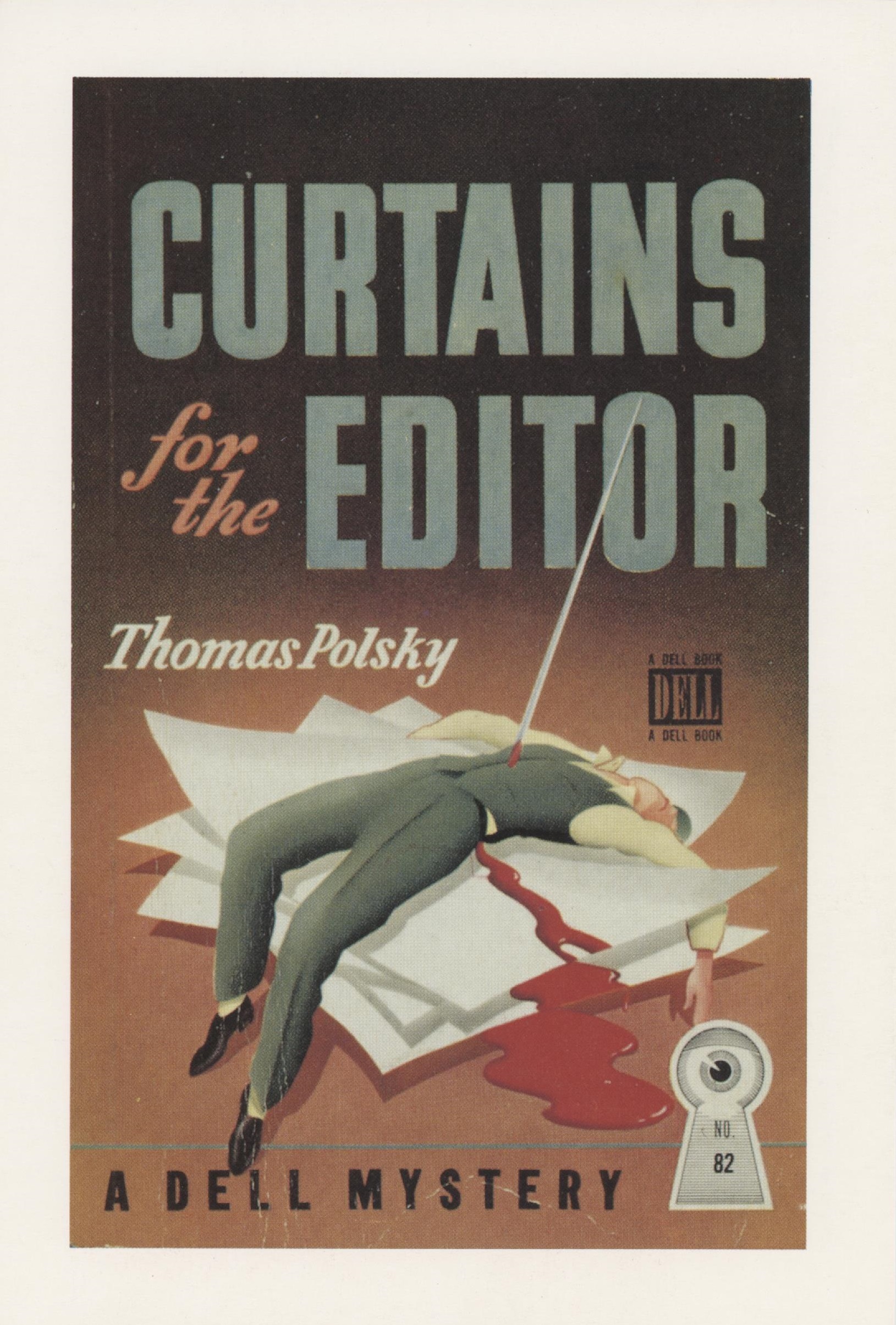
I also had a career that made the regular money.

10 Editor

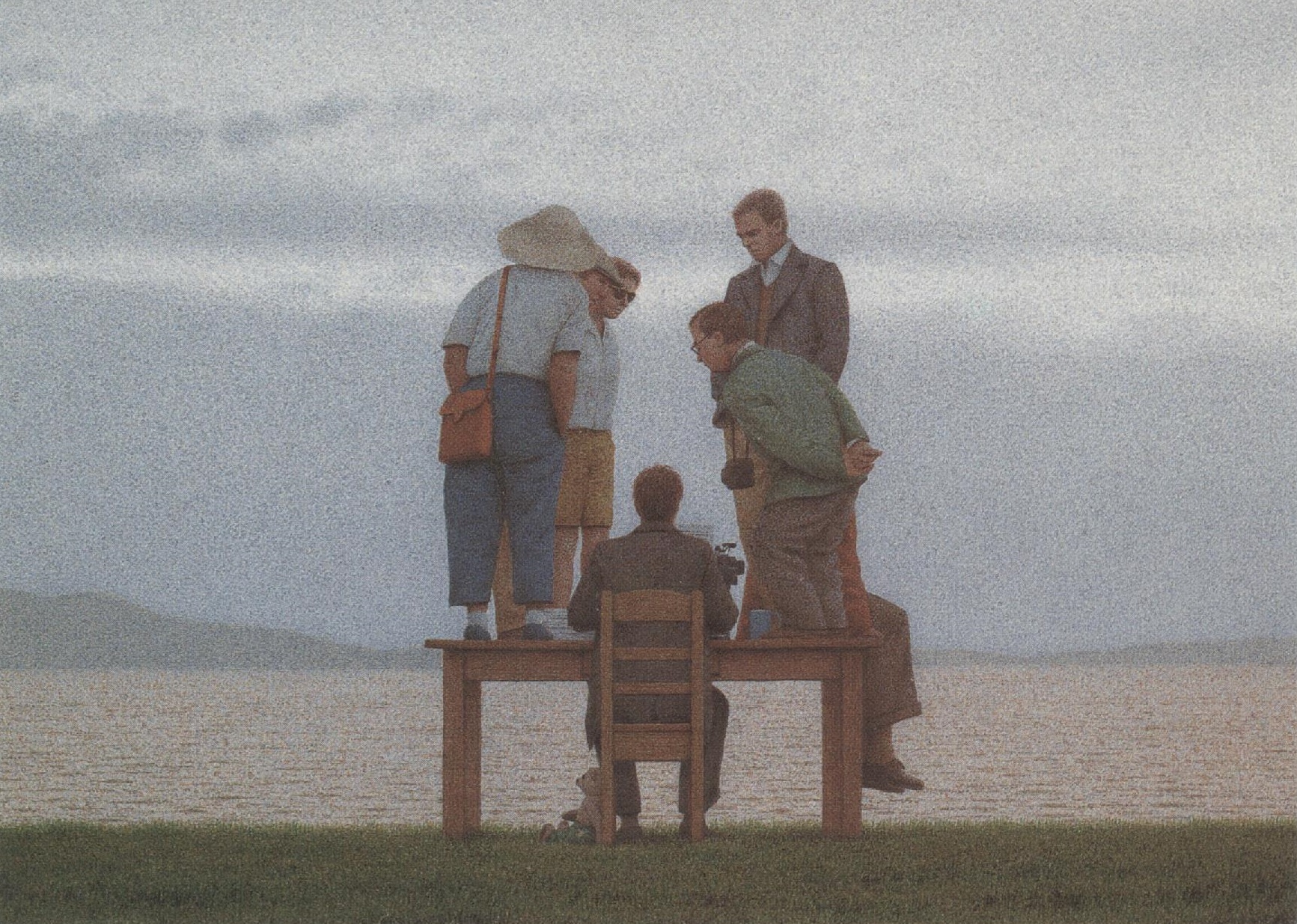
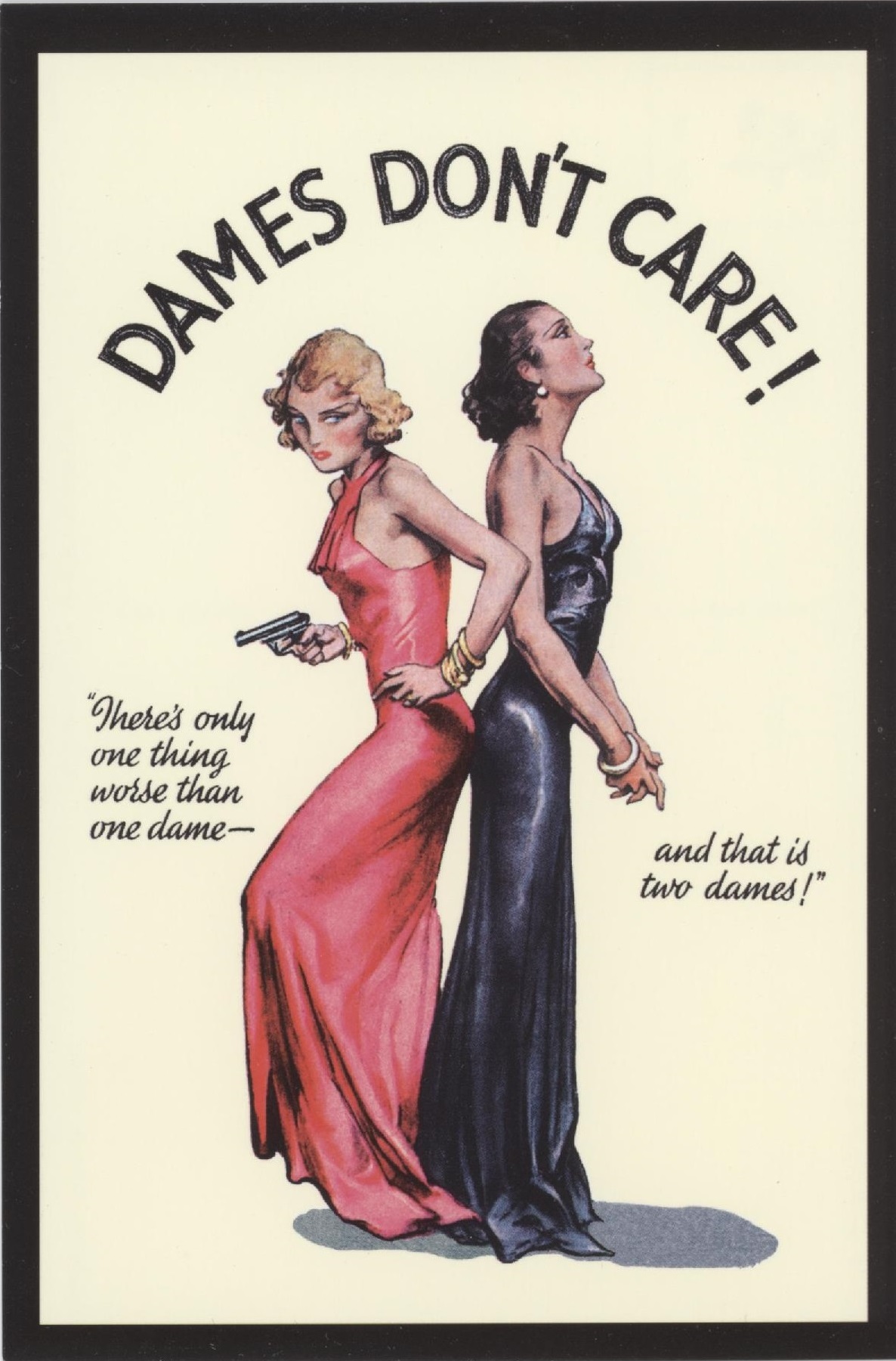
I met the woman who became my wife (on the left).

11 Dames

I made an army of friends who were ready for whatever came our way.

12 Friends

I became a home owner.

13 House

We bought dogs from a nice English lady (they were overrunning her castle).

14 Dogs

I dwelled in this magical, mostly wet land for 21 happy years. Now I live somewhere else…

15 Oregon

…but I still owe everything to Seattle. I arrived on Thursday, January 10, 1980. Thirty-five years ago today.

All postcards are from the Run-DMSteve collection, with eternal thanks to Rudi Rubberoid for getting me started. Don’t get me started. This post is dedicated to the revolving neon signs that once owned the night in downtown Seattle. The three I remember are Beat the Clock (a 24-hour diner), the Seattle Post-Intelligencer globe (“It’s in the P-I!”), and Elephant Car Wash. They spin still in some alternate reality, under the bluest skies you’ve ever seen. Now go forth, have adventures, and get on a train!