Archive for the ‘music’ Category

In 1986 I spent six glorious summer weeks at the Clarion West Writers Workshop. I went to class Monday through Friday to study with six science fiction and fantasy writers and editors: Ed Bryant, Suzy McKee Charnas, Particia McKillip, Joan Vinge, Norman Spinrad, and David Hartwell. (I had to quit my job to go.) From this experience I learned that I had little future as a science fiction and fantasy writer, so I fell back on Plan B, which was to grow up to become John Updike.

That didn’t work either, but I still treasure my Clarion experience. (Loyal Reader Linda was one of the logistical wizards who ran Clarion that year, so let me thank you again, Loyal Reader Linda, for your most excellent work.) Clarion runs a Write-a-thon along the lines of National Novel Writing Month to help raise money for the workshop. This event is also a good way to force yourself to write faster, dammit.

I just signed up for this year’s Write-a-thon, which runs from June 23 to August 2 (concurrently with the workshop). Here’s my Write-a-thon site. Contribute if you feel like supporting literature, or just follow along. I’ll report my progress in this blog.

No, I am not writing a science fiction or fantasy novel. It’s not something Updike would’ve written, either, as I’ve replaced all the sex with trains. Just kidding. All the sex is on a train. With aliens. Which reminds of a class I took two years ago in how to write erotica. The instructor, a woman, wrote supernatural/science fiction erotica. She told me that the number-one question she received after reading a story in public (usually at a sex shop) was, “Did that really happen to you?” She had to restrain herself from saying something like, “Why yes, my boyfriend is a centaur.”

Write on!

Random Pick of the Week
The Charlottes, Things Come Apart (1991)
Includes their cover of “Venus.” You may remember from the original by Shocking Blue (who were Dutch) and the dynamite interpretation by Bananarama (English) that this is a voice-driven song. The Shocking Blue’s singer, Mariska Veres, had enough sex appeal to swamp Britney Spears, plus she was singing in a foreign language, plus she sounds like a man. Bananarama, of course, had those three pure-pop-voiced women.
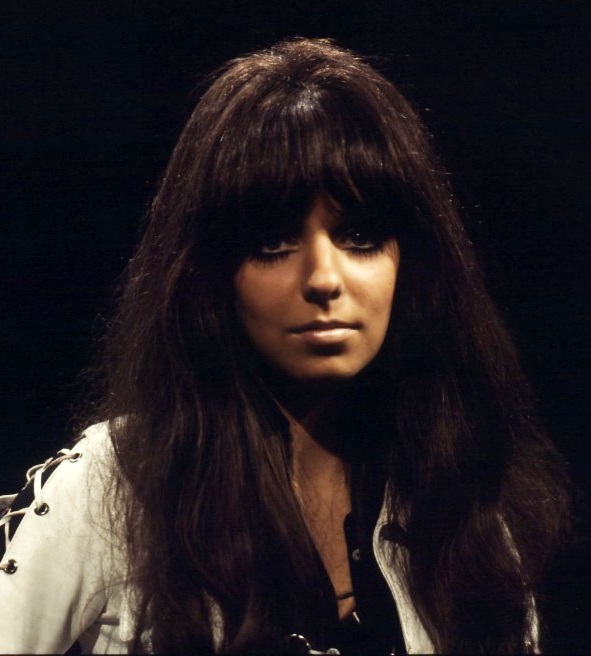
Mariska Veres
Mariska Veres circa 1970

Bananarama
Bananarama circa 1986. In 1980 they sang back-up in concert for The Nipple Erectors.

The Charlottes (another English band) don’t even let their unnamed singer into the song for the first 50 seconds, and when she does join in she’s an island of calm. Or she’s lost at sea. You pick. They turn “Venus” into a guitar rally that stops cold around the 4-minute mark, then rises from the dead and moseys along for another 2 minutes. This song should be cut in half or doubled! The strangest thing of all is that I find myself air-drumming along rather than air-guitaring. The rest of these songs sound like outtakes from “Venus,” except for “Beautify,” which shows some restraint, and “By My Side,” which takes up almost 10 minutes of this odd album.

Random Pan of the Week
Various artists, Cinnamon Girl: Women Artists Cover Neil Young for Charity (2008)
The Neil Young presented here is frozen in the 1970s, with a heavy concentration on Harvest and After the Gold Rush. There’s not much you can do with marathons like “Cowgirl in the Sand” and “Down By the River” (basically the same song), though a couple of women try, one on the banjo. Nobody takes on “Cortez the Killer,” which I suppose was disqualified for its title.

Kate York’s “Comes a Time” and Louise Post’s “Sugar Mountain” stand out. (Post co-founded female alt-pioneers Veruca Salt.) The rest of these interpretations sound alike or are way too country for me, everyone strumming away and treating Mr. Young with reverence. As if he’d encourage that – this is the guy who was delighted when Lynyrd Skynyrd wrote “Sweet Home Alabama” in response to “Southern Man.” For collectors only.

“Ghostbusters”
Ray Parker, Jr.
1984

R&B hitmaker Ray Parker, Jr. once said that his biggest challenge in writing the theme song for this movie was the lack of words that rhyme with “ghostbusters.” PolitiFact rates this assertion as True. The only two rhymes I can think of are “feather dusters” and “workplace clusters,” neither of which work in the context of fighting off an invasion from the afterlife.

“Ghostbusters” is a rip-off of Huey Lewis & The Snooze’s “I Want a New Drug.” I don’t care which one came first. Both of them go on way too long (3:59 and 4:45, respectively) and anyway they’re both distant descendants of the “George of the Jungle” theme. In 1987, Michael Jackson reused this riff for “Bad” (at 4:06 it fits right in). The result of all this cross-pollination is that whenever I play Weird Al’s “I Want a New Duck” I hear this whole crowd singing.

Ghostbusters was a silly movie, but it gave us two lines that we’re still quoting here at the Bureau: “Zool, you nut” and “Here’s  your mucous, Egon.” Parker’s song gave us two more: “Who ya gonna call?” and “I ain’t afraid of no ghosts.”

It was Loyal Reader Tilda who demonstrated the versatility of that second phrase. Shortly after the movie was released, when the Orioles were scheduled to play the Mariners, she announced, “I ain’t afraid of no birds!” I’ve been customizing this line ever since, particularly whenever I find myself trapped in another workplace cluster.

In honor of Tilda and her sidekick Rickalope’s 23rd anniversary, everyone go listen to Ray Parker’s “You Can’t Change That.”

Random Pick of the Week
Mark Lanegan Band, Blues Funeral (2012)
Tilda strikes again – thanks for the tip, kid. Mark Lanegan was the singer in Screaming Trees and a man who, judging from that work and his solo albums, never fails to find the gray cloud around every silver lining. Blues Funeral is not what I’d call perky, but I love two tracks, the rocking “Riot in My House” and the almost-danceable, techno-influenced, unapologetically romantic “Ode to Sad Disco.” I’d have to love that one just for putting the word “disco” on a Mark Lanegan album.

Random Pan of the Week
Can, Monster Movie (1969)
Rhapsody says of Can’s first record, “The band fails to play a single note that is not ahead of its time.” Big talk for an app with more bugs than a Cape Cod cranberry bog during an August sunset. These German avant-gardesters make me want to holler, and not about anything good.

RIP, Ray Manzarek (1939-2013). This. Is. The. End.

Q: What happened to the end of 1986 Week?
A: It collided with the weekend. Party!

Q: Aren’t you too old to party?
A: You’re never too old to party. You might have to party at 12 frames per second instead of 24, but you’re never too old to party.

Q: Well, how would you rate 1986? What kind of year was it musically?
A: It was a very good year for blue-blooded girls of independent means.

Q: Since you were writing about 1986, why didn’t you mention The Smiths’ The Queen Is Dead? It’s supposed to be their best album.
A: I’ll end with them. Sort of. Like it’s any of your business anyway.

Q: Looking at your tag cloud, I see that the biggest name is Bruce Springsteen. You mention him a lot, but you don’t write about him very much.
A: You have to form a question in the form of a question. Don’t be a sports journalist.

Q: Right. Bruce – WTF?
A: Springsteen has been around so long and recorded so much that it’s impossible not to notice him. He’s a handy measuring stick. Dylan has been around even longer and has recorded even more, but he doesn’t have the same impact on our culture. Bruce has remained relevant, or at least topical. Bob has not. Plus I don’t like Dylan’s voice. But to answer your question, I don’t know what I could add to the existing mountain of Springsteen music journalism that would make a difference or sound original by even one gram. So I’ll go on referring to him and trying not to refer to Dylan. Or Donovan.

Q: How are you getting along in the novel-writing sector?
A: I’ve written 15,000 words.

Q: Is that a big number?
A: If I keep them, yes. If not, no.

Q: Would you say that writing a novel is an iffy proposition?
A: I’d say I knew the job was dangerous when I took it.

Q: What did you listen to today? Sweatin’ to the Oldies?
A: Today I listened to M83’s Hurry Up, We’re Dreaming (2011). The radio hit, “Midnight City,” sounds like vintage Depeche Mode. I’m still wading through the rest of this two-disc set. This French band is kinda arty, like Arcade Fire but without the beat. I might have to counter with Oingo Boingo. I might spend this week listening to M83, blink-182, Haircut 100, Matchbox Twenty, Heaven 17, Maroon 5, The Dave Clark Five, The Bobby Fuller Four, 3 Doors Down, and Fun Boy 3.

Q: Fun Boy 3?
A: I bet I’ll be able to dispense with some of these guys in a song or two!

Q: Where’s Deadmau5 on your list?
A: I just learned that the 5 should be pronounced as an s. I feel as ridiculous as the day someone busted me for pronouncing R.E.M. as “rem.” Which reminds me of something I read recently. What a way to begin a review: “I don’t ordinarily like to think about sex and R.E.M. at the same time…” I don’t even care what the rest of the sentence is! (Review of the film Fourplay in Portland Mercury, 27 February 2013)

Q: Let’s get back to The Smiths. Are you hating on them?
A: As if. I like half a dozen of their songs very much, but they’re scattered across their four studio albums, so their 1986 disc, The Queen Is Dead, didn’t move me.

I have tons of respect for Johnny Marr, their guitarist, but not much for Morrissey, even if he’s still being treated like a god. If all bands can be explained by The Monkees, then Johnny Marr is Mike Nesmith and Morrissey is Davy Jones.

Nevermind all this Q&A BS. Here’s a real interview for you. In the April 9 Seattle Weekly, Duff McKagan, the original bass player in Guns N’ Roses, interviews Marr. (Marr has a new album, The Messenger. It has some surprisingly strong tracks for a guy whose heyday was in 1986.) The interview is not only fun, it produced this gem:

McKagan: You were sort of the anti-guitar hero. I’m just so fascinated by your guitar style. I try to picture you guys in 1979 or whatever. I don’t know what he was listening to to get that sound.

Marr: Joy Division were rehearsing in the room above my band. They were scary guys just to look at because they wore old man’s clothes. With haircuts like they just came from the second world war. And that was much scarier than looking at someone who looked like the New York Dolls, or one of the Rolling Stones.

A: Everyone have a good week. Sweat to the oldies all you want, but don’t sweat the small stuff.
Q: I didn’t ask a question!
A: Deal.


Siouxsie & The Banshees
Tinderbox
1986

Siouxsie & The Banshees are proof of the power of networking. Susan Dallion was one of a group of early Sex Pistols fans who were inspired to go out and make music too. She changed her name to Siouxsie Sioux, which is impossible to type, and recruited the first Banshees in 1976.

Siouxsie’s drummer, John Ritchie, changed his name to Sid Vicious and joined the Pistols. Her first guitar player, Marco Perroni, kept his name but joined Adam & The Ants. She got a guitarist back from the Pistols, Steve Jones, but it didn’t take and he ended up recording with Bob Dylan, Joan Jett, and Iggy Pop. This is starting to read like a LinkedIn profile. When two other band members quit during a tour in 1979, Siouxsie recruited Robert Smith of The Cure and a drummer named Budgie to fill in. Budgie had already changed his name from Peter Edward Clarke. Still with me? Smith eventually went back to The Cure. Budgie eventually married Siouxsie. None of this ever happens at the monthly lunches of the Oregon Columbia chapter of the International Association of Business Communicators.

I’ve written about Siouxsie & The Banshees in my round-up of female acts of the 1980s. I called them (and The Cure) “goth outfits.” That was doing them an injustice. They’re much more than stereotypical black-clad, pale-skinned, bloodless disciples of H.P. Lovecraft who long for death’s ashen caress. They also rock with considerable force…though not on this record.

Tinderbox is not only misnamed (I don’t hear much on it that’s flammable), it’s so smooth that I can’t always tell which song I’m in. The exceptions, however, are more like the Banshees I remember. “Cities in Dust,” an unblinking glimpse of the apocalypse, was the hit. It’s good – it takes The Pretenders’ “My City Was Gone” one step further and almost makes it danceable – but “Cannons” is the real sleeper. I also like “92 Degrees,” which starts slow but builds to a satisfactorily melancholy finish.

Tinderbox is a record for confirmed Banshees. As for the rest of us, keep networking, because a) you never know, and b) you never know.

Random 1986 Pan of the Day 1
Pretty in Pink soundtrack
When I posted this in 2013, I made Pretty in Pink a Pick. I’ve changed my mind. Echo & The Bunnymen’s “Bring on the Dancing Horses” is the only superlative song, and it’s available everywhere. However, this album is notable for a rare appearance by the strangest name of the 1980s, Belouis Some. Some, who was Neville Keighley when he made his first appearance on earth, had two hits that were popular in ’80s dance clubs: “Some People” and “Imagination.” His contribution here, “Round, Round,” is not in that league. Overall, the Pretty in Pink soundtrack is still better than the soundtrack to The Breakfast Club (1985), but not within a light year of the soundtrack to Singles (1992).

Random 1986 Pan of the Day 2
The Church, Heyday
Midnight Oil without the grit. So otherworldly it can barely be detected through the Hubble Telescope. They had a hit in 1988 with “Under the Milky Way,” which was easily within Perry Como’s comfort range.


Graceland
Paul Simon
1986

I sold all my records. In 2011 I realized that I hadn’t played one since 2005. Did this cause me to drop a record on my turntable? No, because by then all I had left was a turntable. I’d already sold the rest of my stereo components. I’d never felt the need to replace them.

After turning this over in my mind for another year, I packed up everything (only a dozen LPs but about 250 45s, now called “sevens”) and took it all to a local store, Music Millennium. I hate having anything around that I never use, but many of these discs I bought when they were released, and this was an emotional moment. The store clerk was very kind. You’d think she’d been through this before with other men my age.

I sold the turntable on Craigslist. That left a portable phonograph we occasionally deployed at backyard parties. I sold that on Craigslist, too, to a guy named Adam, who was celebrating the start of his first real job after college. (At Music Millennium, they told me that people 35 and younger were the ones who were keeping vinyl culture alive.) Adam was all smiles when he saw what was waiting for him. He’d brought an album along to test the unit’s sound quality. When he slipped it out of the paper bag and I saw the starkly lit faces of Paul Simon and Art Garfunkel, both of them dressed in black, I yelled to Special D, “Get in here!”

Bookends,” she breathed.

Bookends

We put Adam’s record on and pulled the trigger. Special D and I were transported back to teenhood by the half-minute of lonely guitar, the Bookends theme, that preceeds “Save the Life of My Child.” At that point we were ready to either adopt Adam or just give him the damn thing, but common sense won out and Adam went home with his new phonograph and I put his money in my wallet.

This brings me to what I consider the best album of 1986, Paul Simon’s Graceland. (The critics at Rolling Stone agree with me, but the readers go with Bruce Springsteen & The E Street Band Live/1975-85. Stupid readers.)

Graceland is remarkable in so many ways that I’m just going to mention four: That the guy who wrote Bookends was still writing like a fiend 20 years later; that it revitalized a career that was already pretty damn vitalized; that the first two cuts, “The Boy in the Bubble” and “Graceland,” as awesome as they are, are just the beginning of the record; and that Graceland is filled with as many quotable lines as a Star Trek episode, as well as lines you can misquote, including the title of this post and a gem thought up by Special D as she walked through the Florida surf at sunrise: “I’ve got diatoms on the soles of my shoes!”

Paul Simon is not on my Top 10 list of favorite artists, but even I can appreciate the achievement that is Graceland.

So what did I do with the money from the sale of my records? What do you think? I bought CDs!

Random 1986 Sexually Ambiguous Danceable Doofuses of the Day
Book of Love, Book of Love
LA might’ve been Ground Zero for big fluffy danceable-and-forgettable faux-New Wave zero-calorie pop confections. Exhibit A: Book of Love, a group that scored in 1986 with three songs off their debut: “I Touch Roses,” “Modigliani (Lost in Your Eyes”), and “Boy” (where the crucial lyric reads, “Boy, uh huh, boy, uh huh/Boy, uh huh, boy, uh huh”). Actually I kinda like that one.

I can only describe them by comparing them with their big fluffy contemporaries. Book of Love is a poor man’s Orchestral Maneuvers in the Dark, or a funky version of The Spoons. They pick up where Missing Persons left off, though I can’t say what they found that Missing Persons was missing. They borrowed Erasure’s grooves but dropped the histrionics. Bonus: When all three of the women in Book of Love sing together, they come close to Joan Jett!

Random 1986 Pan of the Day
Depeche Mode, Black Celebration (1986)
Yes, I enjoy these guys, but come on. Every song on this disc could’ve been done better by someone else. Depeche Mode bounced back in 1987 with Music for the Masses (featuring “Behind the Wheel” and “Strangelove”).